


History of Bojarski Gościniec
History of Bojarski Gościniec
Main Building
That's how it all started
It all started with the first look. Nineties. Overgrown plot, building hidden in shashchi and among rubbish, abandoned, forgotten. And yet there was something smouldering in this ruin — the promise that a space could be created here that would come to life.
“When I climbed the metal beams and looked towards the river, I saw meadows and forest. And I already knew that this place has potential” — recalls Mr. Eugeniusz, owner and originator of Gościniec.
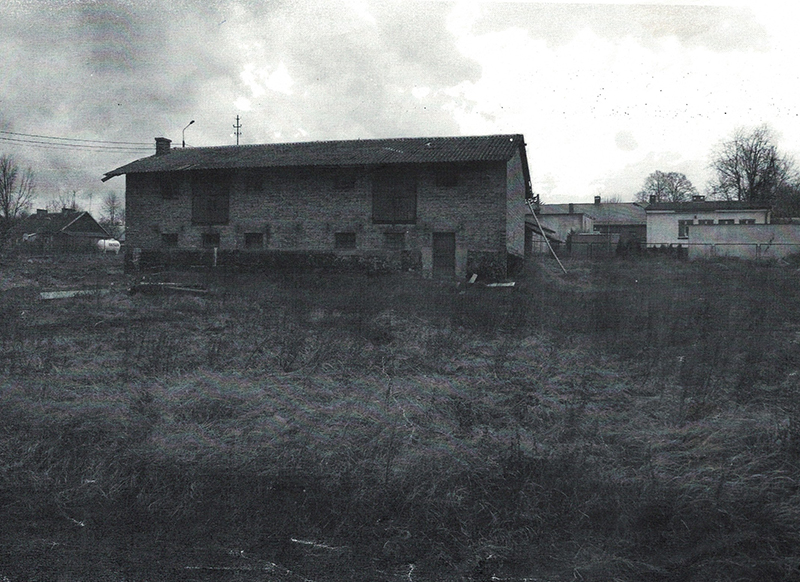
Conversations began. The building belonged to the GS, the plot to the Orthodox parish. Formal affairs dragged on for years. Some said it was impossible, that this property could not be sold. There were letters to the metropolitan, meetings, interventions, attempts to get along. Sometimes the whole idea seemed to fall apart. And yet, step by step, we succeeded. First the building, then the plot. Only then did the dream begin to take real shape.
Construction of the guest house
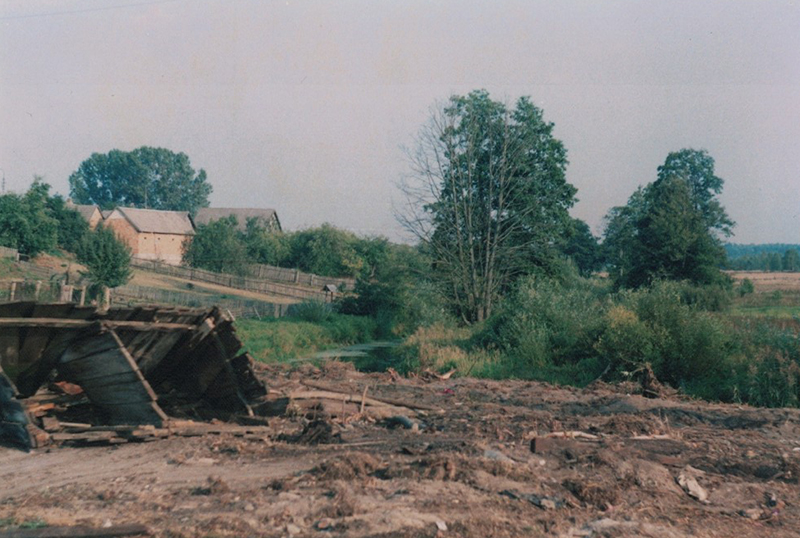
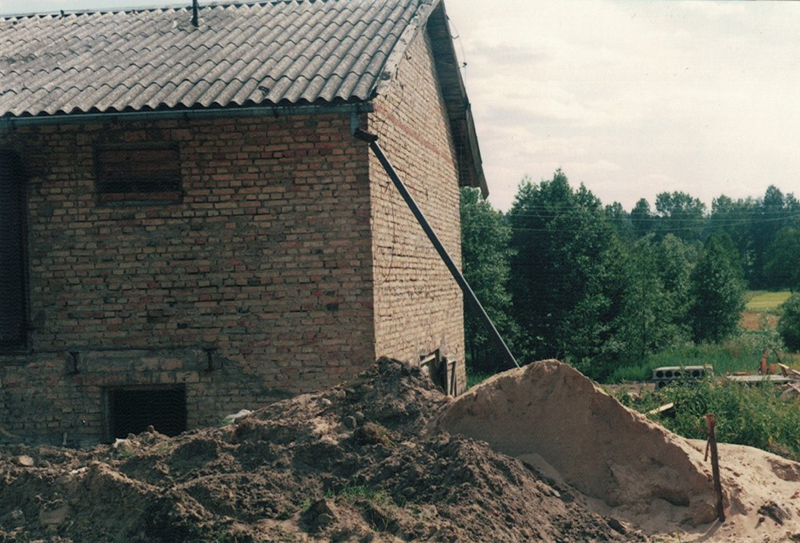
The first building permit for Gościńec was obtained in 2004, but the work itself began only in August 2009. The construction took place despite all the difficulties and limitations. The first major event in the new building took place in September 2010, when a dinner was held after the ordination of the Orthodox Church, in the presence of the Metropolitan. The official opening of Gościńec took place in January 2011, when the first rooms and apartments were put into operation and a restaurant was launched.
“There was a ball, there were the first rooms and the apartment, there was already a restaurant,” adds Mr. Eugeniusz.
Not much at first — five rooms and a suite. It was enough to receive the first guests. Over time, more elements arrived — terraces, restaurant space, finally an observation tower, whose pillars the owner had already left at the construction stage.
“I knew it would be needed — because the view from it is really special,” she says.
Today
It is difficult to imagine that here, where the halls full of light and wood stand, where guests sit on the terrace overlooking the river, there used to be a dump. And yet, this is the beginning of our story. The story of the Guest was formed by patience, perseverance and the belief that in an abandoned place you can see the future heart of the house.
See the Main Guest Building today.
Carski Building
Former railway carriers' house
The Carski Building is a historical building dating from 1905, originally standing in the village of Zwodzieckie, where families of railway workers guarding a given section of tracks lived.
“I drove there, looked, looked at it... a beautiful building, but I thought I wouldn't buy it anymore,” recalls the owner.
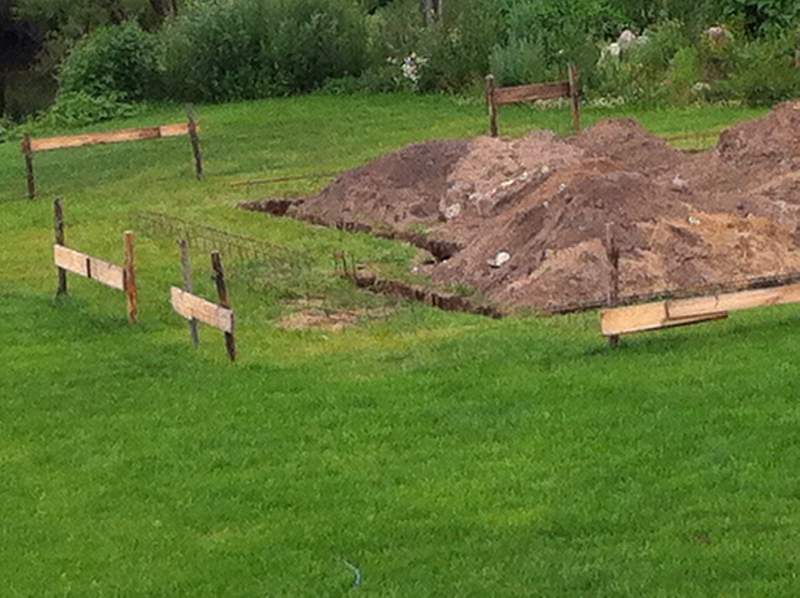
Fortunately, we managed to acquire it in a tender in 2011 and start its transfer and reconstruction in Gościniec.
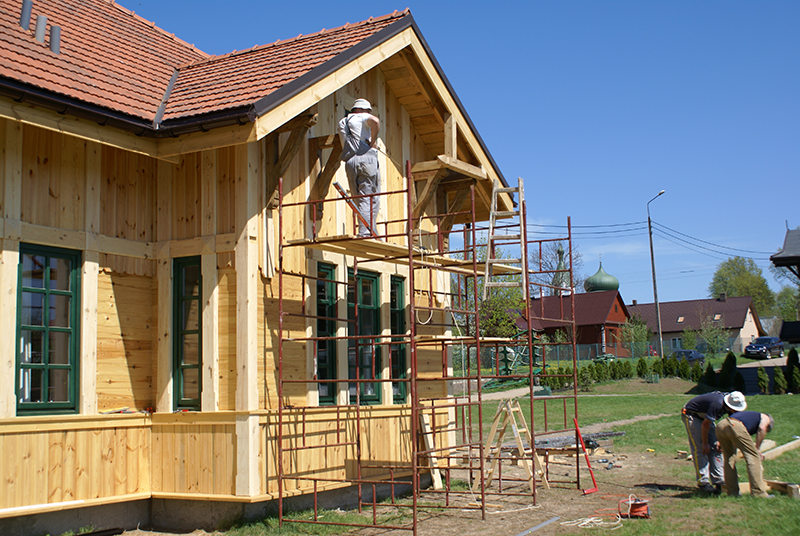
Reconstruction with soul
During the reconstruction, many original elements were preserved, including a tile brought from the Hermitage near Warsaw. The building was extended by one floor, while maintaining harmony and historical character.
“I wanted it to look like it used to, but it had more space and functionality,” adds the owner.
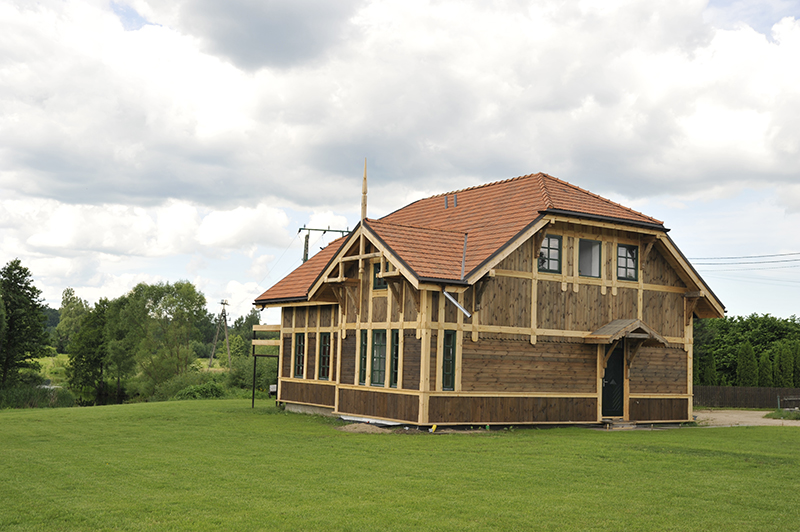
Today
Today, Tsarski offers about 200 m² of usable space with rooms of various sizes - from 13 m² to 30 m² - including rooms with river views. Carefully recreated interiors, preserved architectural details and historic tile create a unique atmosphere. The building has become one of the most interesting points of Gościniec, combining the comfort of a modern stay with history and proximity to nature.
See the Imperial Building today.
Czeremcha Building
Former residence of the warden
The Czeremcha building is a former residence of the head of the tsarist railway station, built in 1905 on a one-hectare plot with a beautiful garden and concrete driveways.
“I saw this building and I thought: we'll see what can be done,” recalls the owner.
A few years later, the opportunity to purchase appeared, and the whole building was carefully demolished and moved to Gościniec, with the support of family and friends.
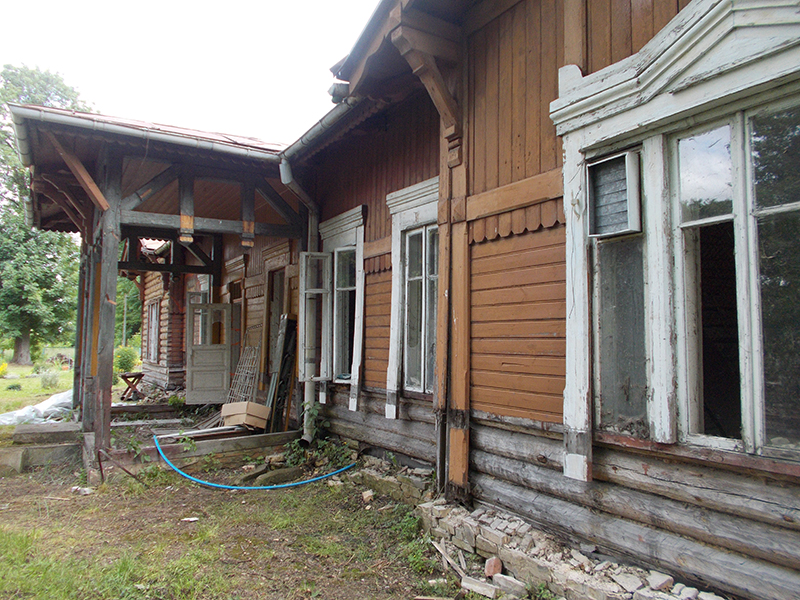
Reconstruction with precision
In the process of reconstruction, many original elements were preserved: formwork, decorations around the windows, and even a tile from the village of Pustelnik near Warsaw.
“The old tile was of high quality, I tried to get it wherever I could,” adds the owner.
The work required precision, patience and taking care of the formalities associated with the protection of monuments.
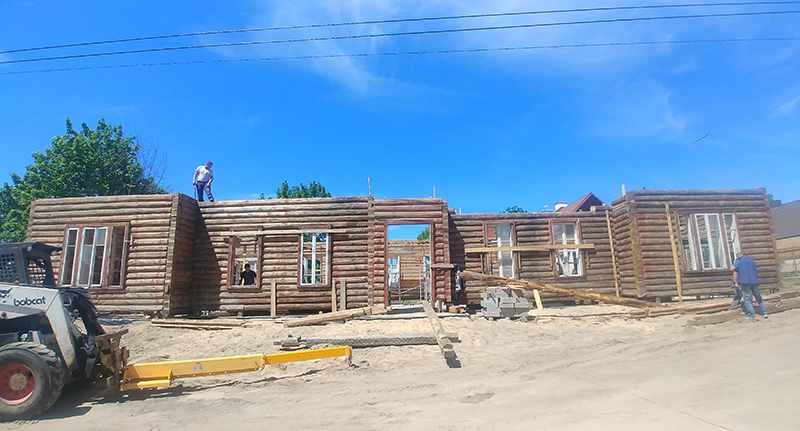
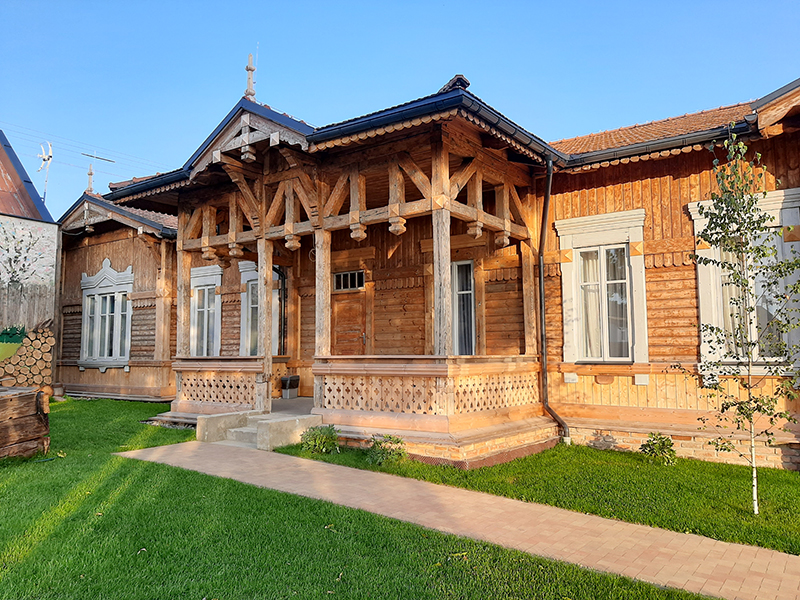
Czeremcha today
The building was put into use at the beginning of 2021, and its reconstruction was recognized with the award for the best preserved monument. Today, it offers spacious, comfortable rooms ranging from 18 m² to 60 m², including family rooms, where modern amenities blend in with the historic character of the interiors. The preserved ornaments, the carefully recreated tile and the garden create a unique atmosphere, and the location allows a quiet stay in harmony with the surrounding nature.
See the Czeremcha Building today.
Apartments by the river
Underground apartments by the river, commonly called “caves”, were created from the idea of the owner of the guest, Eugeniusz. When the plot was purchased, there was a natural pit on its territory, which became the starting point for creating a unique space.
“The story started when we bought this plot, and there was such a pit, and I didn't want to fertilize the land,” recalls Mr. Eugeniusz, owner and originator of Gościńec. “I thought to myself that I would dig a little there and make such a cave.”
Spontaneous decision
The first steps were very spontaneous.
“There was still Uncle Olek, there was Kostek, a neighbor, and together we made the foundation. We masonry the walls, we put the ceiling slabs and it was a room of 6 by 12 meters. We covered with earth, and on the outside there were stone slopes, protected by stone - it looked very nice. And, of course, there was a source too,” said Mr. Eugeniusz.
Legalization and development
After obtaining the building conditions and building permit in 2018, the underground apartments were finally put into operation at the end of 2021-2022. Each of them is about 55 square meters; one is equipped with a sauna, the other has a slightly different interior design.
Apartments today
These underground apartments by the river, called “caves”, are today one of the most unique places in Gościniec. Blended in nature, overlooking the river, the spring and the surrounding forest, they were created from the passion, perseverance and imagination of the owner, offering an intimate space, closeness to nature and a sense of intimacy that distinguishes them from other places.
See Riverside Apartments Today
Suite with sauna
From the piggy bank to relaxation
Today's sauna suite did not immediately have such a face. In the beginning it was a former pigsty — a simple, utilitarian place, destroyed by the teeth of time.
“Once upon a time, pigs were raised in this building. After the balls, you could see how they were bitten by animals at the bottom,” recalls Mr. Eugeniusz, owner and creator of Gościniec.
Transformation and Reconstruction
The wooden structure was dismantled and rebuilt. It gained an extra floor, a new life and a new function. In 2015, an apartment was built here with a spacious living room and a wood-burning sauna — the kind the owner had dreamed of from the beginning.
“I wanted it to be a real sauna — wooden, with a good stove. And so that there is a bathroom next to it, where you can cool off immediately after leaving,” he says.
Today — comfort and intimacy
Today it is one of the most unique places in the whole of Gościniec — a space of about 60 m², which combines the comfort of an apartment with the intimate atmosphere of a wooden sauna. This is the story of a building that from an economic place has become a place of rest, meeting and recuperation.
See the sauna apartment today.
Workshop and conference room
From the municipal store to the meeting space
This building served residents for many years as a communal shop — one of those formerly operated by the Municipal Cooperative “Samopomoc Chłopska”. Over time, it ceased to perform its function and for a long period stood empty, slowly losing its former character.
.jpg)
The beginning of the transformation
As always, everything started with a vision written on paper, the author of which was none other than Mr. Eugeniusz Ostapczuk - the originator and founder of Bojarski Gościniec.
.jpg)
The new chapter began in February 2023, when renovation and expansion work began. The building gradually changed its face, and its current shape was formed after two years. The finishing works inside took even longer, but thanks to them a space was created that today is used for meetings, workshops and work with people.
.jpg)
.jpg)
Today
On the first floor there is a bright wooden workshop room with an area of approx. 170 m². The ground floor of the building forms the back of this space — a spacious lobby, a therapeutic office, a salt grotto with a tenement room, a cloakroom and sanitary rooms.
The former store is alive again, albeit in a completely new role — as a place to meet, work with the body and rest.
.jpg)
.jpg)
See the offer of the workshop and conference room
Other articles



 Book your stayDiscover our accommodation offer